
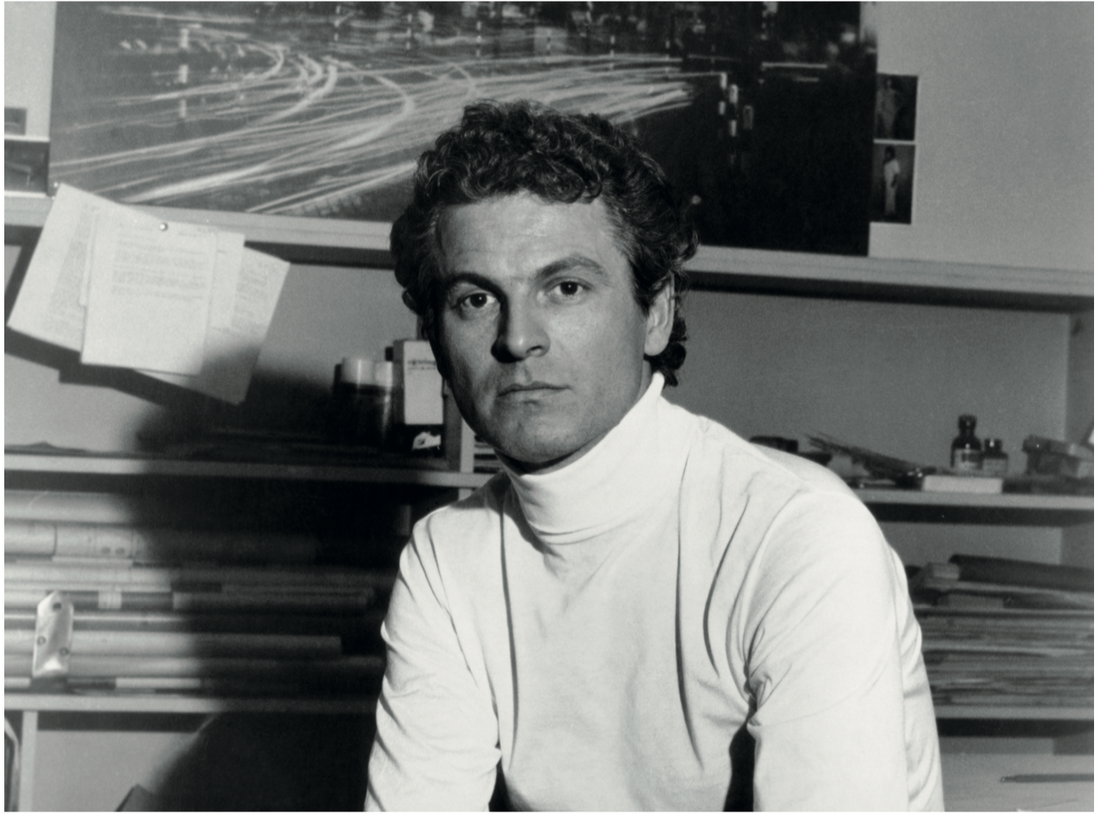
When exploring the rich and varied landscape of French design from the 1950s to the 1970s, the name Pierre Paulin inevitably stands out. With his visionary approach, Paulin reimagined modern furniture, making it both artistically captivating and incredibly functional.
Promising Beginnings
Born in 1927 in Paris, Pierre Paulin quickly developed an interest in design and art. After studying at the École Camondo in Paris, his passion for innovation propelled him onto the international stage.
Organic Revolution
Paulin was known for his fluid, organic forms. He had the unique ability to transform simple materials into fabric-covered sculptures. His famous "Tulip Chair," launched in 1965, symbolizes this ability: an enveloping, flower-like seat that offers unparalleled comfort.
Technical Innovations
Not content with rethinking form, Paulin also ventured into technology. The innovative use of expanded foam and stretch jersey allowed him to create previously impossible shapes. This is evident in his creations like the "Pumpkin" sofa, which combines comfort with futuristic aesthetics.
Public Engagement
Paulin's impact isn't limited to exhibition halls. His collaborations with French presidents Georges Pompidou and François Mitterrand led him to redesign spaces such as the Élysée Palace, merging traditional opulence with a modern aesthetic.
A Strong Heritage
Pierre Paulin passed away in 2009, but his innovative spirit continues to inspire. His approach, where comfort meets art, laid the foundation for many innovations in contemporary design. Numerous exhibitions and reissues attest to the importance and continued relevance of his work.
Conclusion
Pierre Paulin's journey in French design is a testament to what can be achieved when artistic vision meets functional necessity. Examining his work, we are reminded of design's ability to enrich our lives, both visually and in terms of daily comfort.