
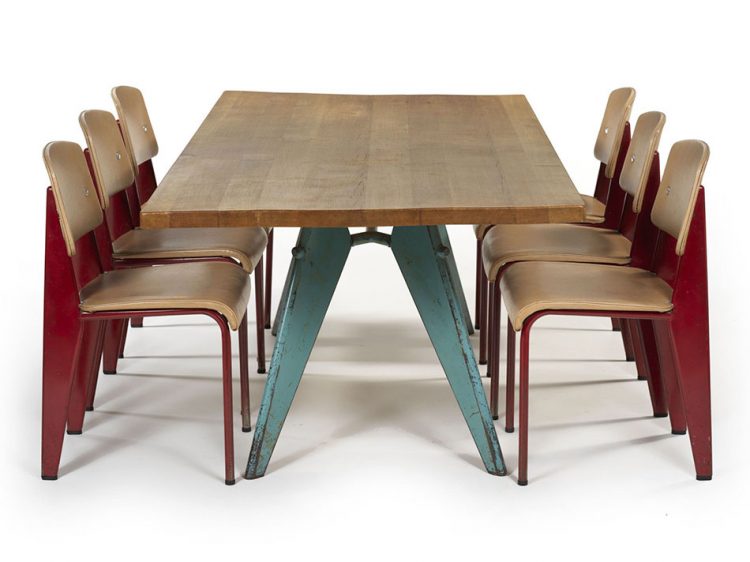
In the fascinating world of 20th-century French design, few figures embody the spirit of innovation and engineering as much as Jean Prouvé. Fusing art and science, technology and aesthetics, Prouvé left an indelible mark on modern design and architecture.
Origins and First Innovations
Born in 1901 in Nancy, Jean Prouvé came from a family of artists. Early on, he showed a penchant for blacksmithing and metalwork. After opening his own workshop in 1923, Prouvé experimented, creating lighting fixtures, balustrades, and stair railings. But it was his passion for furniture that would propel his career.
The Metal Age
Prouvé is perhaps best known for his revolutionary use of metal. At a time when wood still largely dominated furniture, he saw the potential of metal as both a strong and flexible material. His famous "Standard Chair," with its steel frame and wooden seats, is a perfect example of this fusion.
Design and Functionality
For Prouvé, function always preceded form. He designed his pieces as an engineer, seeking to solve concrete problems. This functionalist approach is reflected in pieces like the "Antony Chair," which, with its ergonomic shape, offers unparalleled comfort.
The Modular Architect
Beyond furniture, Jean Prouvé also ventured into the world of architecture. His modular creations, designed to meet post-war housing needs, were revolutionary. Using prefabricated panels and a steel structure, his houses were both economical and quick to assemble.
An Undisputed Heritage
Jean Prouvé passed away in 1984, but his influence lives on. Designers and architects around the world continue to draw on his vision, and his pieces are today prized by collectors and design history enthusiasts alike.
Conclusion
Jean Prouvé left a unique mark on French design. An engineer by training and an artist at heart, he demonstrated that technique and aesthetics can not only coexist, but also reinforce each other. Exploring his work reminds us of the importance of innovation, functionality, and timeless beauty.